
 Request A Quote

What Will Affect the Warranty of a Solar Street Light?
 FACEBOOK
 TWITTER
 LINKEDIN
Solar street light warranties may be 5 years and sound simple, but what the buyer is buying is a system that consists of a number of parts with a variety of failure modes, service lives, and some form of claim evidence.What will affect the warranty of solar street light.
The battery can be covered under manufacturing defects but not for the normal loss of battery capacity. The controller can be covered if the parameters, wiring or surge do not deviate from the approved design. The lamp body can be covered for coating or sealing defects only and not for impact or for flooding or corrosive exposure exceeding the rating.
Commonly installation labour, crane, closing of roads, customs and replacement freight are not covered by the product warranty. Transport damage can be either the responsibility of the seller, buyer or carrier depending on the agreed handover point and record of condition at loading/delivery.
Convert warranty to a “responsibility schedule” for each component before a purchase order is issued. The contract should stipulate the services to be provided, how they are to be documented, who will be paying for each service and when risk will pass.
Think of the Purchase as a System, NOT One Warranty
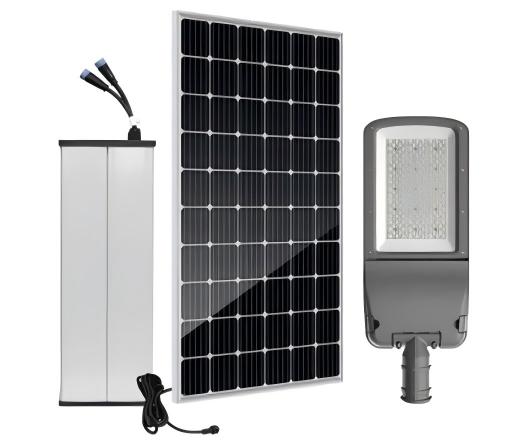
The solar street light is composed of a solar panel, battery, controller, driver, LED module, house, sensor, connector, pole and mounting hardware.
Dawn Lighting’s LED solar street light systems can be configured to be integrated, separated or semi-integrated. The greater the number of components provided and installed by various parties, the more critical it is to clarify the responsible party of each interface.
Ensure that the supplier has included the warranty period, the date when the warranty starts, the remedy and the exclusions, for each major part, in the quotation or contract and not just as a headline in the catalogue.
Verify Beginning of Each Warranty
A warranty can begin at the time of manufacture, shipment, delivery, installation, commissioning or final acceptance. These can be separated by months on an overseas project!
Extended storage prior to commissioning may lead to lower state of charge in batteries, which may shorten their life time. Contract to include storage temperature, recharge interval and who will be responsible to keep the units in storage recharged.
Also verify that if a component is repaired or replaced, the repaired/replaced component is warranted for the same amount of time or until the unused portion of the original warranty term.
Write down the production batch, shipment date, delivery date, installation date and acceptance date of each lot.
Include Five Warranty Boundaries in Purchase Order.
The following schedule is minimum procurement framework. Use specific numbers (e.g. “5 year warranty”) instead of generic numbers (e.g. “five year warranty”).
Do not reject a claim for not being able to use a light or for accepting it solely on the basis that the light went out. The first task is to determine if the cause is related to the product, site, installer, carrier or to a later modification.
State for each boundary the proof to be provided such as serial number, batch number, test report, photos, controller data, acceptance record and deadline for written notice.
| Item | Project Data |
| 1. Order & Start | Product/model: all-in-one solar street light, 30 W / 60 W / 100 W; quantity: per order; warranty start: contract; complete fixture: 3–5 years; replacement parts: contract. |
| 2. Battery Warranty | Battery type/model: model-specific; capacity: 60–120 Ah; term: contract; capacity threshold, cycle or DOD limits: by model; remedy: contract. |
| 3. Electrical | Controller/driver/sensor models: order specification; controller: 12 V; warranty: contract; surge/lightning, permitted parameter/firmware changes, and fault logs: define in contract. |
| 4. Body & Structure | Housing: die-cast aluminum; warranty for LED module, lens, seals, coating, bracket/pole: contract; IP/IK: IP65 with IK impact protection; liability for corrosion, water ingress, impact, and field drilling: contract. |
| 5. Installation | Installer: by project; responsibility for wiring, sealing, foundation/pole, settings, commissioning, and acceptance: contract; crane, labor, removal/reinstallation costs: contract; acceptance records: by project. |
| 6. Shipping & Claims | Trade terms/risk transfer, packing standard, damage-report deadline, carrier claimant, and freight/duty/return costs for replacements: order contract. |
Installation is a Separate Warranty Boundary
Damage to otherwise compliant equipment can occur due to improper wiring, reverse polarity, loose connections, unsealed cable glands, wrong panel orientation, weak foundations, and wrong controller settings.
The purchase order must separate the product warranty and installer’s workmanship warranty. If a project is a separate pole, arm & bracket installation, verify the following: who is checking foundation, wind-load design, fasteners, bonding and final alignment.
IP ratings are valid for an enclosure tested under specified assembly conditions. They are not applicable to an opened battery box, a damaged seal, a field-drilled hole or field-drilled cable entry.
An installation acceptance test should include day testing of electrical functions and a night test that includes charging, dimming, sensor responses, lighting hours and fault reporting.
For the supplier, if they only offer guidance on installation, labour, lifts, civil work and reinstallation should not be presumed to be part of the remedy for the product.
There is no distinction between Battery Warranty and Capacity Guarantee.
Most often the item that is disputed is the battery which can seem to be normal ageing versus failure.
For an outdoor all-in-one solar street light, the battery, the controller and the luminaire are housed in one single enclosure, however there may be differences in the warranty conditions. Request battery chemistry, nominal capacity, depth of discharge, charge voltage, operating temperature and the expected number of cycles.
Warranty should specify whether it is for defects in materials and workmanship only, or guarantees a certain remaining battery capacity after a specific period. It should also include the test method, the temperature and state of charge used for capacity determination.
Ensure remedy is complete, partial (pro-rated) replacement, repair or credit and who pays removal, return freight or customs.
For controller and Electrical Protection to need their own terms.
One advantage of a semi-integrated solar street light is that they may be easier to access batteries and controllers in the field, but there are also more connectors and field interfaces. Write down the approved controller model, firmware, charge profile, SENSOR LOGIC and any remote settings.
The supplier should specify if there are separate clauses for controller, driver and sensor failures, and if surge protection devices are part of the provided configuration.
External causes are often referred to as lightning, reverse polarity, short circuits, broken wires or replacement parts and settings not within the specifications.
If a fault happens, export export controller data prior to resetting or replacing anything. With no history it is hard to determine if a problem is with the controller or if the charging environment is poor.
When lamps are recycled, Lamp Body and Structural Damage Must Be Separated.
The lamp-body boundary should include the LED module, optical lens, housing, seals, coating, fasteners, bracket and pole instead of the term “fixture.”
Manufacturing defect could be failure in sealing, out of normal adhesion of coating or failure of LED module. The physical impact, vandalism, vehicle collision and incorrect lifting and damages from a third party accessory normally have to be considered separately.
The corrosion coverage shall be the same as the declared site. Even if the light has an outdoor IP rating, the finish can get out of standard due to coastal salt, road chemicals, standing water and industrial pollutants.
Avoid any change of the housing, mounting of a camera, battery replacement, controller replacement or enlargement of the solar panel without written approval. These changes may impact sealing, heat, charging and loading of the structures.
Keep with warranty file the approved drawings, bill of materials and written change orders.
Transport Risk Ends at defined handover point
Transport is a footnote not to be ignored. Lamp may leave factory in good condition, and arrive with a broken glass, bent brackets, loose batteries or torn boxes.
Before shipment, confirm:
- Incoterm and specific risk transfer point.
- Packing of the lamp head, lamp panel, battery, lamp pole and lamp bracket.
- Pre-shipment inspection and loading pictures.
- Transport documents, labels and state of charge requirements for batteries.
- Delivery inspection period and concealed damage notice period.
- The individuals involved in the carrier claim are the one who files and follows the claim.
- Replacement freight/cust/loc.delivery charges by whom?
- If it is not installed in time, there is a limitation on storage.
The buyer is responsible for checking the packaging, quantities, serial numbers and visible damage prior to signing an unconditional delivery receipt. The concealed damage should be photographed immediately after the damage is discovered.
The contract should specify if replacement parts are provided under warranty at no freight/import cost or if freight/import is covered.
A Valid Claim is not Free Site Replacement!
If the component defect is acceptable, then the repair might only involve the defecting component, instead of replacing the entire lighting system.
The mutually agreed remedy can be:
- Fix of the failed part
- Replacement of equivalent or same component
- Credit to be used for a future order.
- Return of the part to the inspector
The following should be allocated to a party prior to purchase: Removal, reinstallation, crane hire, traffic control, technician labour, return freight, customs and travel.
These service charges may be greater than the cost of the defective component for large and high-pole projects or for overseas projects.
Do not wait for failure and wait until it is time to construct the Claim File.
Prior to the order, a competent solar street light supplier should explain the claim route to the customer, the person in charge, the response time, evidence list and whether the failed parts need to be preserved.
Note the serial number, location, battery / controller configuration, photos of the installation, acceptance readings and installer at commissioning.
Never disassemble, reset or replace parts without instructions unless for safety reasons it needs to be done immediately.
Conclusion
A solar street light warranty isn’t just what’s written in a catalogue – it’s of practical use. The cleanliness of battery/control unit/lamp body/ installation and transport.
The buyer minimises risk by specifying in the purchase order and by setting the handover and commissioning conditions and determining who pays the labour and freight etc. claim costs prior to the goods leaving the factory.
FAQs
Q1. If all the components are to be the same length of time?
No. Different terms may apply to the battery, controller, LED module, housing and solar panel and structure. Write each of the terms on a different line.
Q2. What should be a battery warranty?
It should describe the chemistry, defect period, capacity threshold, test method, temperature and cycles limit/defect depth of discharge and remedy.
Q3. Does controller damage always have a payout?
No, coverage will vary as per cause. Some combinations of wrong settings, reverse polarity, lightning, external power surge and unauthorized parts may not be covered in the warranty on the controller.
Q4. Are the installation costs covered or is it a transport damage?
The contract should specify the person who will install the photovoltaic array, where the risk will be transferred to the carrier and where the carrier will be transferred to the photovoltaic array. Workmanship or cargo responsibility should not be substituted for product warranty.
Q5. What records shall be used to back up a warranty claim?
Maintain purchase and delivery records, serial number, installation and acceptance reports, photos, controller records, maintenance records and written approvals.


- 10 Meters Lamp Post
- 10 Meters Pole
- 1000w Led Projector
- 100W LED Tunnel Light
- 12 Meters Lamp Post
- 12 Meters Pole
- 1200w Led Projector
- 15 Light Pole
- 1500w Led Projector
- 150W LED Tunnel Light
- 1800w Led Projector
- 2 In 1 Solar Flood Light
- 200w Led Tunnel Light
- 50w Led Tunnel Light
- 6 Meters Lamp Post
- 6 Meters Pole
- 8 Meters Lamp Post
- 8 Meters Pole
- 800w Led Projector
- 80w Led Tunnel Light
- Colourful Decorative Light
- Conical post
- Courtyard Lamp
- courtyard light
- courtyard lighting fixture
- Decorative Landscape Light
- Decorative road Light
- Flood Light For Courtyard
- Flood Light for Garden
- Flood Light For Outdoor
- Foot Led High Bay Lights
- high bay led lights 100w
- industrial lampshade
- industrial LED shed lights
- industrial magnifying glass with light
- Integrated Solar Flood Light
- led courtyard lamp
- led courtyard light
- led high bay light 100w
- LED Projector For Stadium
- Led UFO High Bay 150W 5000k
- Lighting Plants Mining Price
- Maintenance Free LED Street Light
- Pic Controlling Tunnel Light
- PLC controlling tunnel light
- Post Top Garden Light
- RGB Landscape Light
- Rgbw Decorative Light
- Smart Tunnel Light
- solar courtyard lamp
- solar courtyard light
- Solar LED Road Light
- Solar Street Light For 10 Meter Pole
- Solar Street Light For 12 Meter Pole
- Solar Street Light For 6 Meter Pole
- Solar Street Light For 8 Meter Pole
- Split Type Solar Flood Light
- Sporting Projector
- Stadium Led Projector
- Street Lighting Post
