
 Request A Quote

what time do the street lights turn on?
 FACEBOOK
 TWITTER
 LINKEDIN
Do you ever see the lights on the streets automatically turn on when night falls? This smooth passage between the daylight and the artificial light does not happen accidentally, it is the product of the high-technology oriented on enhancing the safety, visibility, and energy saving.
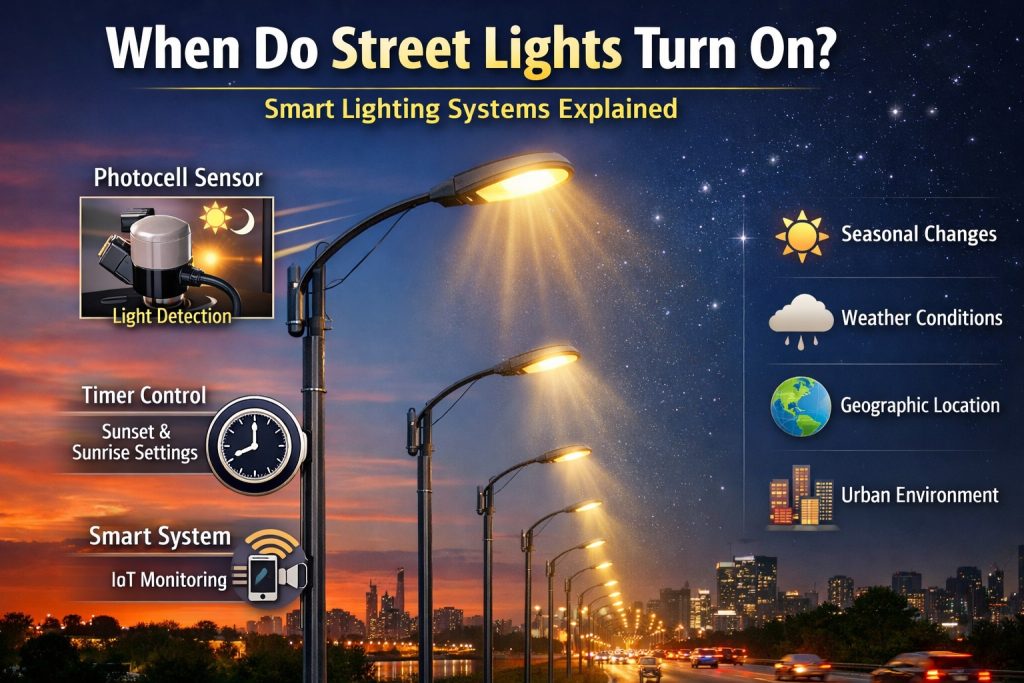
The knowledge of the timing of street lights is vital in the planning of cities, energy regulation and smart city planning. The lighting systems of the modern streets are structured to be dynamic to the environmental conditions as opposed to operating at fixed time schedules.
This guide will discuss the operation of street lights, factors that influence the activation time of the lights, and the emerging technology that is changing the systems of outdoor lights.
When do the Street lights come on?
The lights on the streets do not come on at a given clock time at night, but at dusk. Most modern systems do not operate on a timetable, but on sensors or smart controls which sense when the natural light has fallen below a set level.
Normal Activation Times:
- Summer: 7.30 PM to 9:00 PM.
- Winter: 4:30 PM -6:00 PM.
- Cloudy/rainy days: Earlier than usual.
When the lights turn on, this depends on the location, weather, and the nature of light system employed.
How Do Street Lights have Ideas of When to Turn on?
The automated systems are used to control street lights, detecting changes in the environment. These systems make lights turn on when required, which saves the energy and cost.
1.Photocell Sensors are the most common type of sensor.
The main technology employed in street lights systems is the photocells or light sensors.
- They gauge the levels of ambient light at constant times.
- The circuit is triggered when the light reduces to some preset level.
- Light is again switched off with the day.
These sensors are built on materials that vary electrical resistance with the exposure to light and they automatically switch without the need of human input.
- Timer-Based Systems
Other street lights work with the help of timers which have been programmed based on the schedules of the sunrise and sunset.
- According to geographical information.
- Adjusted seasonally
- Less sensitive to the weather fluctuations.
The sensors are normally accompanied by timers as backup systems.
- Intelligent Control Systems (IoT-Based).
The use of smart lighting networks is becoming a common practice in modern cities.
These systems:
- Link the street lights to a central control platform.
- Welcome monitoring and modification remotely.
- Facilitate the darkening or lightening of light depending on the traffic and activity.
Smart systems enhance efficiency and minimize the use of energy and aid in smart city infrastructure.
The Major Forces that influence the turning on and off of the street lights.
It is not only the sunset that activates the street lights. A number of environmental and geographic influences come in.
- Seasonal Changes
Tilt of the earth is what leads to changes in the number of daylight hours in the year.
- Increased summer days result in late activation of lights.
- Reduced winter days are followed by the earlier lights on.
This is the reason why there is a major difference in the activation times across seasons.
- Weather Conditions
Light levels can be highly affected by weather.
- The presence of cloudy skies diminishes brightness → premature activation.
- Darkness is detected earlier by fog, rain, or dust.
- Crystal skies → delayed activation.
Heavy storms may cause the lights in the streets to come on even in broad daylight.
- Geographic Location (Latitude)
The issue of location is important as it determines the daylight patterns.
- Closer to the equator = there is light the whole year round.
- Further northward latitudes = extensive seasonal changes.
Differences in the light schedules of streets may be extreme in the cities located near the poles.
- Urban Environment
The timing of lights on also depends on the urban design.
- The tall buildings create shadows sooner.
- Trees and buildings intercept sun rays.
- Crowded spaces might need previous illumination.
That is why there are streets that are brightened earlier than the others, although they are in the same city.
Why then Do Street Lights Turn On at an Earlier Time?
You can find lights going on in the street at a time when it is not supposed to. This is normally because of:
- Poor weather conditions led to low light levels.
- Hurdles such as buildings or trees.
- Contaminated or obstructed sensors.
- Differences in the system calibration.
This is typically normal and adaptive lighting behavior.
What Is the Reason Why Street Lights Are Sometimes on during the Day?
Technical problems tend to make street lights work during daytime instead of working normally.
The usual causes are:
- Malfunctioning photocell sensors.
- Issues with wiring or relays.
- Maintenance overrides
- Sensor obstruction (dust, debris, or shade)
The repair of these problems contributes to energy efficiency.
Recent Developments of Street lighting technology.
The last several years were characterized by the development of street lighting due to energy-saving and smart city movements.
Light Emitting Diode Street Lighting.
The benefits of LED technology are that it has substituted traditional lighting in most cities:
- Reduction in energy consumption 40-60 percent.
- Less mortality (reduced to 50,000+ hours)
- Increased brightness and visibility.
- Lower cost of maintenance.
The modern street lighting systems are now using LEDs.
IoT and Smart Street Lights.
The future of urban infrastructure is smart street lights.
The most important characteristics are:
- Motion sensor (Lights are bright when there is movement or traffic)
- Remote fault detection and monitoring.
- Brightness control Adaptive.
- Connection to traffic and environment systems.
These inventions make the process safe and consuming less energy.
Automated Street Lighting Advantages.
There are several notable benefits that the automated systems of street lighting offer:
- Energy Efficiency
The lights are on only when required, thereby saving on the use of electricity.
- Enhanced Safety
Intensive lighting enhances visibility among the drivers and pedestrians.
- Reduced Maintenance
Intelligent systems identify faults and maximize the performance.
- Environmental Sustainability
The use of less energy minimizes carbon and light pollution.
The Future of Lighting in the Streets.
The development of street lighting will go on as cities get smarter.
The trend of the future comprises:
- Lighting systems based on AI.
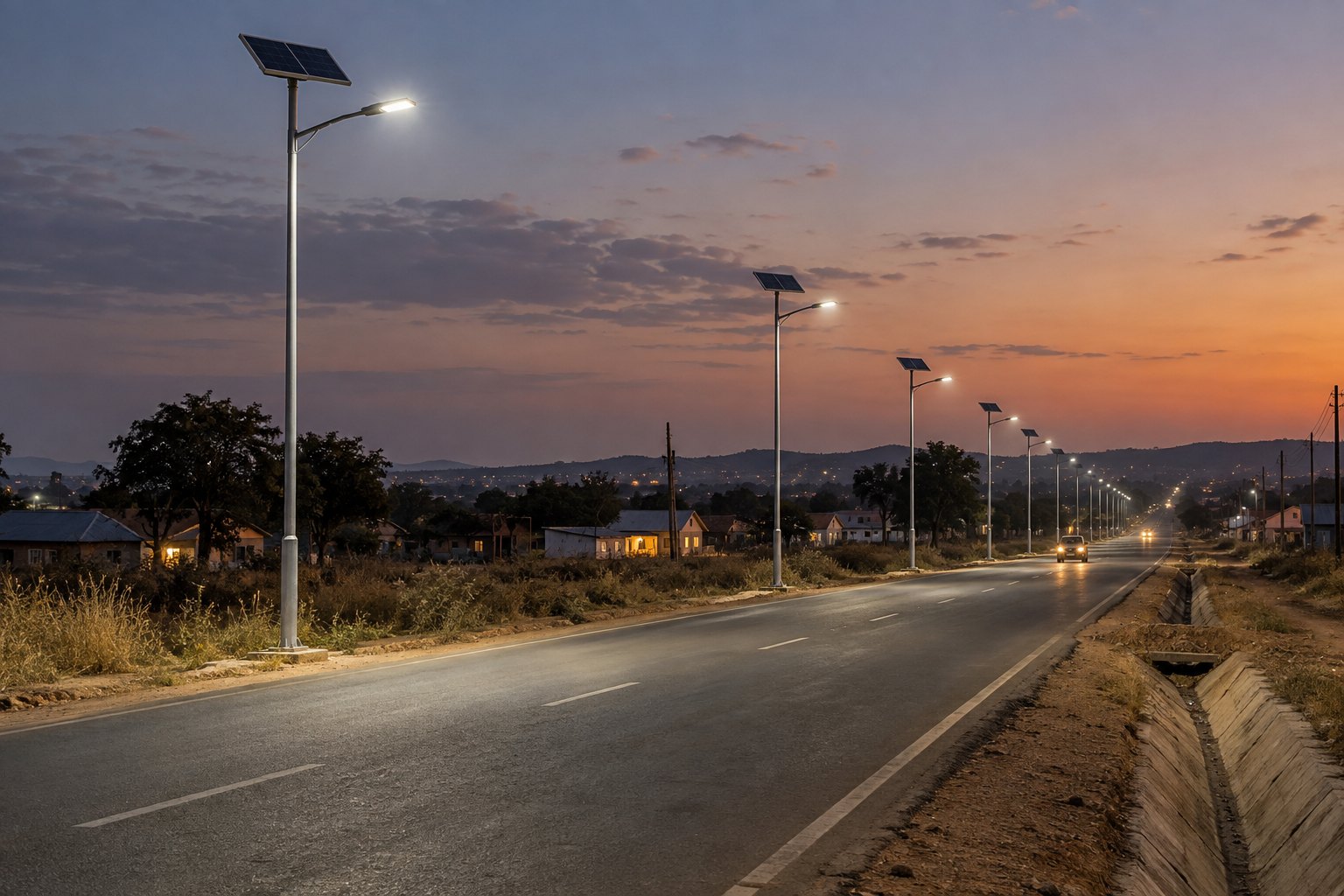
- Street lights operated on solar energy.
- The complete interconnected smart city systems.
- Intelligent optimization of lighting.
Such innovations will ensure that cities are safer, green and efficient.
Conclusion
The street lights are normally activated at the sunset with high-tech applications like photocell sensors, clocks, and intelligent control systems. They are triggered by environmental factors such as season, weather, and location instead of being on a fixed schedule.
Street lighting is becoming more efficient, sustainable and intelligent with the emergence of the LED technology as well as IoT enabled smart systems. These inventions are crucial in the present-day urban infrastructure that provides safe and well-lit conditions to all people.
- 10 Meters Lamp Post
- 10 Meters Pole
- 1000w Led Projector
- 100W LED Tunnel Light
- 12 Meters Lamp Post
- 12 Meters Pole
- 1200w Led Projector
- 15 Light Pole
- 1500w Led Projector
- 150W LED Tunnel Light
- 1800w Led Projector
- 2 In 1 Solar Flood Light
- 200w Led Tunnel Light
- 50w Led Tunnel Light
- 6 Meters Lamp Post
- 6 Meters Pole
- 8 Meters Lamp Post
- 8 Meters Pole
- 800w Led Projector
- 80w Led Tunnel Light
- Colourful Decorative Light
- Conical post
- Courtyard Lamp
- courtyard light
- courtyard lighting fixture
- Decorative Landscape Light
- Decorative road Light
- Flood Light For Courtyard
- Flood Light for Garden
- Flood Light For Outdoor
- Foot Led High Bay Lights
- high bay led lights 100w
- industrial lampshade
- industrial LED shed lights
- industrial magnifying glass with light
- Integrated Solar Flood Light
- led courtyard lamp
- led courtyard light
- led high bay light 100w
- LED Projector For Stadium
- Led UFO High Bay 150W 5000k
- Lighting Plants Mining Price
- Maintenance Free LED Street Light
- Pic Controlling Tunnel Light
- PLC controlling tunnel light
- Post Top Garden Light
- RGB Landscape Light
- Rgbw Decorative Light
- Smart Tunnel Light
- solar courtyard lamp
- solar courtyard light
- Solar LED Road Light
- Solar Street Light For 10 Meter Pole
- Solar Street Light For 12 Meter Pole
- Solar Street Light For 6 Meter Pole
- Solar Street Light For 8 Meter Pole
- Split Type Solar Flood Light
- Sporting Projector
- Stadium Led Projector
- Street Lighting Post
